
Fresh from The Patch: Our pickled beetroot workshop
There was plenty of chopping, stirring and laughter at The Cornerstone Patch today as we harvested freshly grown beetroot and learnt how to preserve it the traditional way.
Guided by Laura, we explored every step of the process, from carefully cleaning and preparing the beetroot to making our own pickling liquid and filling the jars ready to mature over the coming month.
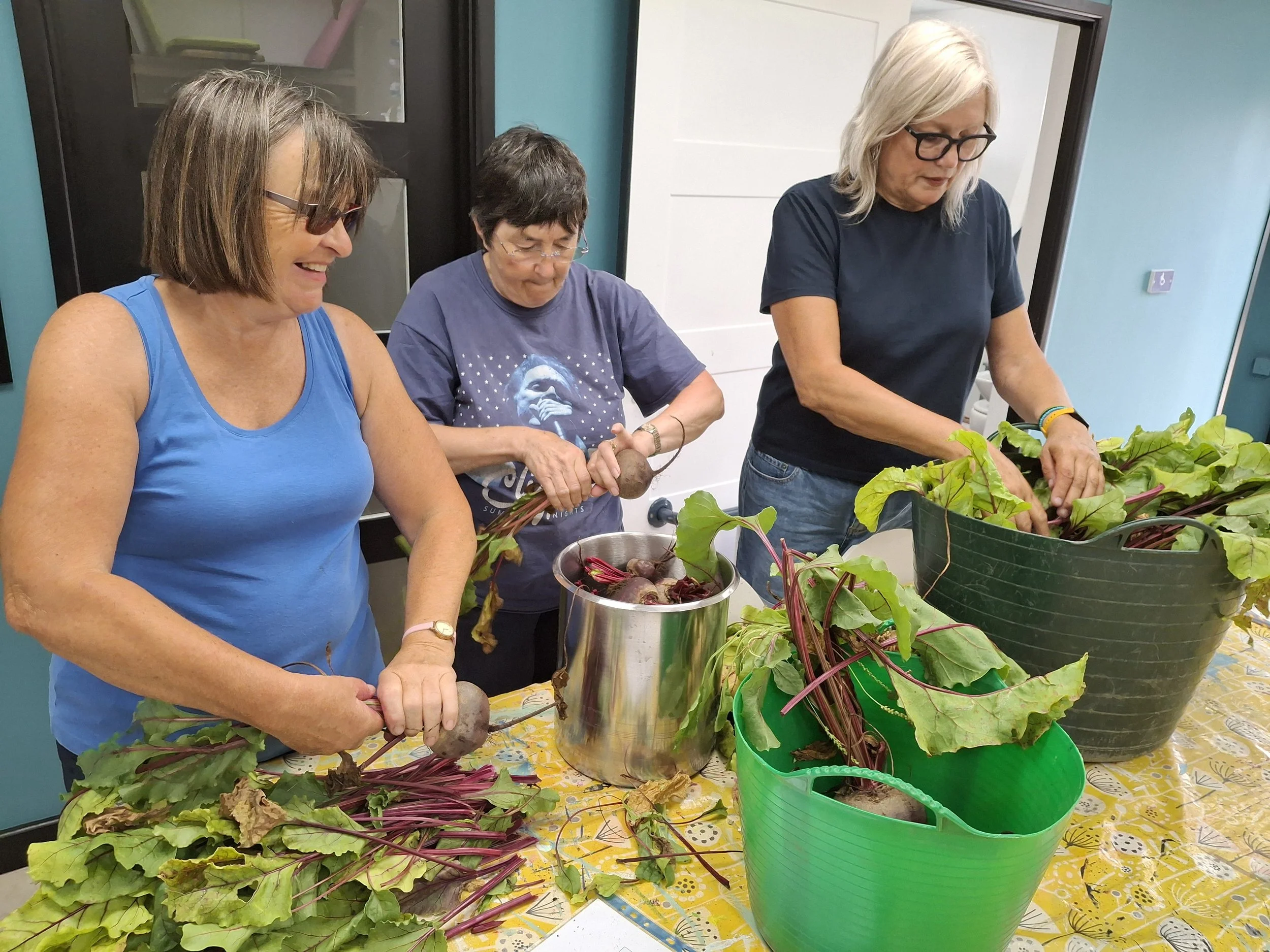
Workshops like these are about so much more than growing food. They bring people together to learn new skills, share knowledge and enjoy spending time outdoors as part of our community.
A huge thank you to our volunteers Jo, Elaine, Suzi and Bridget for sharing your time and expertise.
The jars or pickled beetroot will be available to purchase from The Power House Hub next week for a donation.
If you'd like to have a go at making your own pickled beetroot at home, we've included the recipe and method below.
Patch to Jar: Pickled Beetroot Recipe
Makes: Approximately 5–6 x 450g jars
Maturing time: One month
Ingredients
2kg beetroot, washed
5 tablespoons pickling spice
1.4 litres malt vinegar
200g light brown sugar
Salt
Equipment
Large saucepan with a lid
Medium saucepan
Small frying pan
Sieve
Vegetable knife
Chopping board
Measuring jug
Tablespoon
5–6 sterilised 450g glass jars with screw-top lids
Rubber gloves (optional, as beetroot can stain your hands)
Before You Start: Cleaning Freshly Harvested Beetroot
Shake off loose soil outside
Gently remove large clumps by hand. Do not bang the beetroot together, as damaged skin can allow contamination.Trim carefully
Twist or cut off the leaves, leaving approximately 2–3cm of stalk. Leave the long root intact.First rinse
Rinse the beetroot under cold running drinking water to remove loose dirt.Soak briefly
Place it in a clean bowl of cold drinking water for 5–10 minutes to soften stubborn soil. Do not leave it soaking for an extended period.Scrub individually
Use a clean vegetable brush under running water. Gently scrub the entire surface, especially around the stalk, root and natural creases.Final rinse and inspection
Rinse each beetroot again under running water. Check it in good light and repeat if any soil remains.Keep it clean
Put the washed beetroot into a clean colander or sanitised tray – never back into the harvest container.
Important Food Safety Points
Do not use soap, bleach, disinfectant or vegetable-washing chemicals on the beetroot.
Discard beetroot that is rotten, badly damaged or mouldy.
Keep soil-covered beetroot away from sterilised jars and the clean filling area.
Clean and disinfect the sink, worktop and vegetable brush afterwards.
Method
Place the washed beetroot in an even layer in a large saucepan.
Add enough water to cover the beetroot. Bring to the boil, cover and simmer for 30–40 minutes, or until tender. The beetroot is ready when the point of a knife slides through it easily.
While the beetroot is cooking, wash and sterilise the jars and lids.
Drain the cooked beetroot and leave it to cool until it is safe to handle.
Cut off the tops and roots, then gently rub the skin. You may wish to wear rubber gloves to prevent the beetroot from staining your hands.
Check the pickling spice. If it contains pieces of bay leaf or small whole chillies, remove these and set them aside because they may burn during toasting.
Place the remaining pickling spice in a dry frying pan. Toast gently over a low heat until the spices become fragrant. Take care not to burn them.
Immediately transfer the toasted spices to a medium saucepan. Add the reserved bay leaf and chilli, if using.
Pour in the malt vinegar and add the light brown sugar. Heat gently, stirring until the sugar has completely dissolved.
Increase the heat and boil the pickling liquid for five minutes.
Slice the cooked beetroot approximately 0.5cm thick.
Carefully pack the sliced beetroot into the clean, sterilised jars. Add a small pinch of salt to each jar.
Strain the hot pickling liquid through a sieve to remove the spices.
Carefully pour the hot pickling liquid over the beetroot, ensuring it is completely covered.
If desired, spoon some of the spices back into each jar.
Seal the jars securely. Label each jar with the contents and preparation date.
Store the sealed jars in a cool, dark place and leave for one month before eating so the flavours can mature.
Storage
Unopened jars can be stored in a cool, dark cupboard for up to one year. Once opened, keep refrigerated and use within six weeks.
Adapted from the pickled beetroot recipe in Nancy Birtwhistle's The Green Gardening Handbook: Grow, Eat and Enjoy (page 176), published by One Boat, an imprint of Pan Macmillan.